Outdoors
Stargazing at Mont-Mégantic: A Dark Sky Reserve Guide
Updated
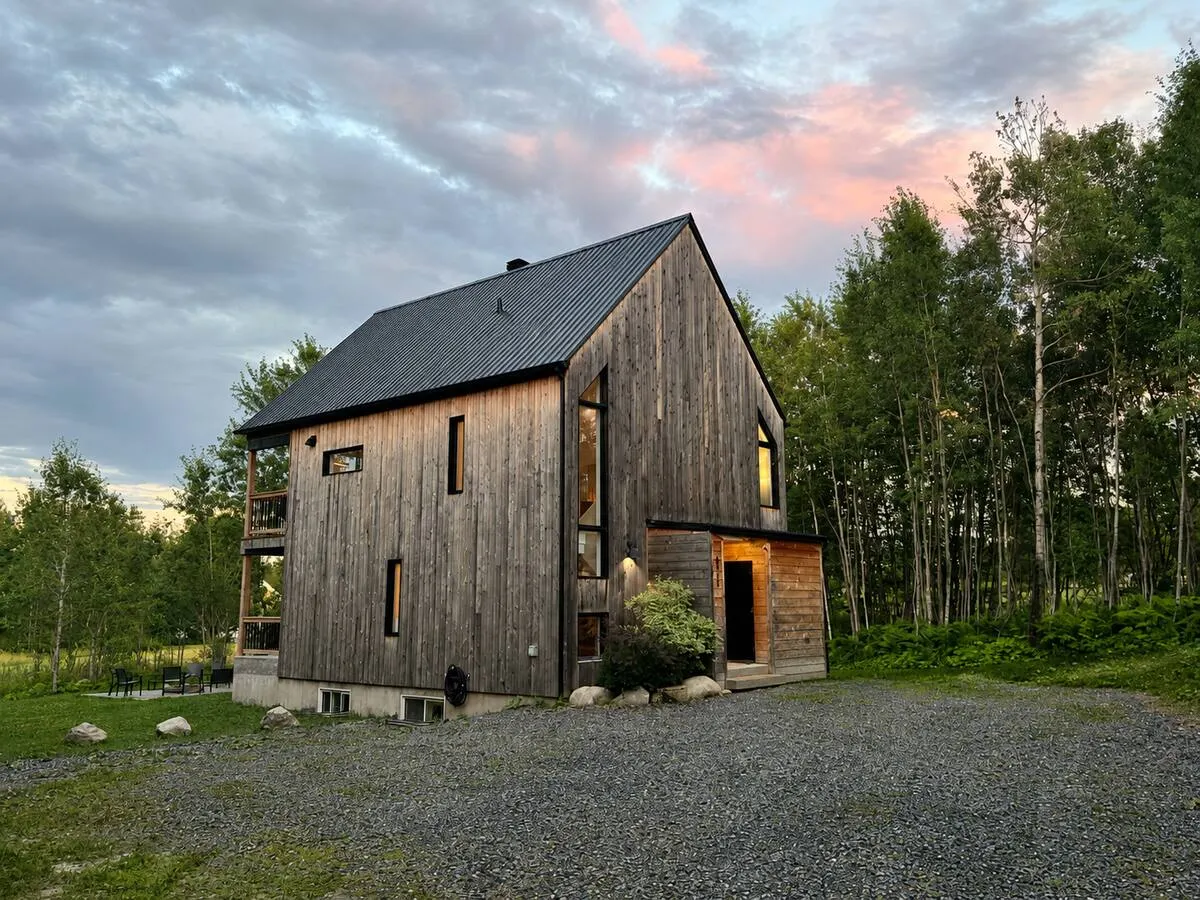
The first International Dark Sky Reserve in the world is in the Eastern Townships, around Mont Mégantic. It is also farther from Coaticook than most people guess from the map. This page covers what the reserve is, how to do an evening at the ASTROLab, and what you can see from a chair by the fire without driving anywhere.
What the reserve is
The Mont-Mégantic International Dark Sky Reserve was inaugurated in 2007, the first of its kind certified by what is now DarkSky International. It covers 5,167 square kilometres and 33 towns and villages across the Granit and Haut-Saint-François regions, plus the city of Sherbrooke, which the reserve calls the largest city in the world inside a dark sky certification. The reserve's site is in French only.
Coaticook lies outside the boundary, to the southwest. It is still farm country with little light, but it is not reserve-grade, and I will not pretend otherwise.
An evening at the ASTROLab
The ASTROLab is the astronomy centre at the foot of the mountain, inside the Parc national du Mont-Mégantic, in Notre-Dame-des-Bois. Sépaq runs the park and sells the tickets. What is on offer:
- Daytime visits of the ASTROLab exhibits and the observatory.
- Astronomy evenings at the ASTROLab in summer and fall: a presentation in the multimedia room, then telescopes outside if the sky cooperates.
- Evenings at the Popular Observatory, up on the mountain.
- Winter astronomy evenings. Sépaq lists the ASTROLab as open on weekends in fall and spring, on Saturday evenings in January, February and March, and every day in summer.
- A Perseids event in mid-August, with several nights of observation. Dates change each year.
Three things to know before you book.
Reservations are required for evening activities. Children 17 and under get in free with their family, according to the ASTROLab.
The presentations are in French. The ASTROLab says so plainly on its English pages. Saturn through a telescope needs no translation, but the presentation before it will be hard going if nobody in your group follows French. Decide with that in mind.
Clouds do not cancel the evening. The program adapts, and if the sky is covered you get an indoor presentation in place of the telescopes.
Then there is the cold. The ASTROLab's own advice reads: "Wear warm clothes. It's very very cold at night." That applies in July too.
The drive, honestly
Notre-Dame-des-Bois is about an hour and a half by car from Coaticook, roughly 100 km (62 miles) each way on two-lane country roads. Winter roads change the math, and not in your favour.
An astronomy evening starts after dark and ends late, so you drive home close to midnight or after it, on roads where deer are common. For a group with young kids, that is a lot. Options that make it easier: put your best night driver at the wheel and let everyone else sleep, go for a daytime visit, or, if Mégantic is the main reason for your trip, spend that one night closer to the park. Sépaq lists camping and other lodging on the park's page.
The daytime visit is the underrated choice: it includes the observatory, the road home is in daylight, and you still get your stars at the house that night.
The sky from the meadow
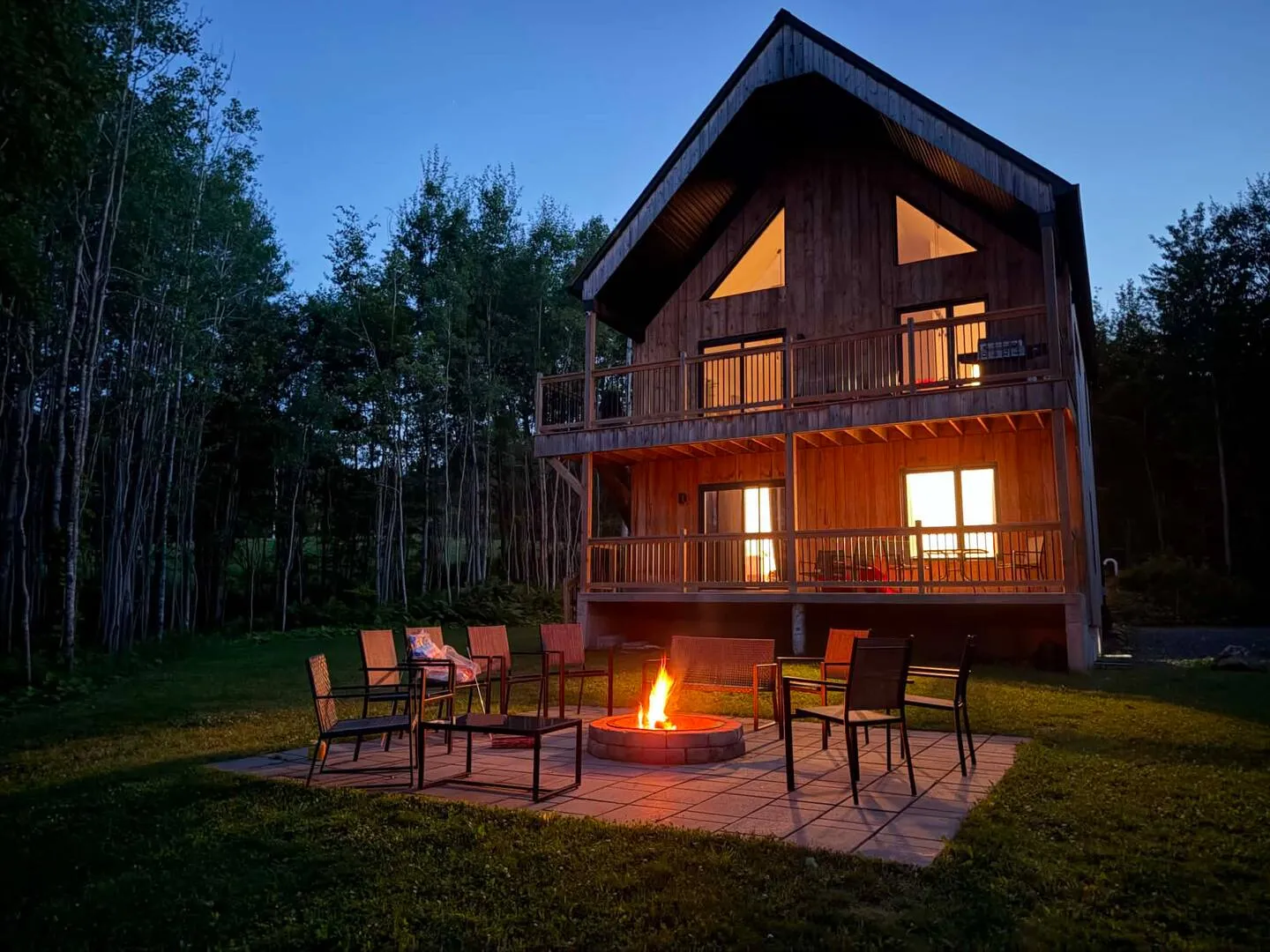
You do not need an observatory to have a good night under the stars. La Villa Foresta sits among the trees beside a meadow, with a fire pit and s'mores supplies, and it is well away from big-city glow. What I can promise is modest: a sky far darker than Montréal's or Boston's. On a clear, moonless night away from the fire, that should be enough to see the Milky Way.
A few things make a real difference:
- Check the moon. A full moon washes out everything but the bright stars. The week around new moon is the one you want.
- Turn off the house lights, or at least the ones facing the meadow, and let the fire burn down to coals. Your eyes need about 20 minutes to adapt, and one look at a phone resets them.
- Use the binoculars. The house has a pair for watching the woods. Pointed up, they show the craters of the moon, the moons of Jupiter as tiny dots, and star clusters like the Pleiades.
- Know the dates. The Perseids peak around August 12 and the Geminids around December 13 or 14. For the Geminids, see the clothing advice above.
Northern lights, honestly
Coaticook sits at about 45 degrees north, the same latitude as the top of Vermont. That is far south for aurora. The lights do reach this far during strong geomagnetic storms, a handful of nights in an active year, and when they do they usually sit low on the northern horizon and look paler to the eye than in photos.
So do not plan a trip around them. If you want to be ready in case, Natural Resources Canada publishes forecasts at Space Weather Canada. When a big storm is forecast and the sky is clear, walk out to the meadow, face north, and give it half an hour. For other ways to fill an evening, see our Foresta Lumina guide, and for what each season brings, the seasons.
Useful links
Bringing a group?
La Villa Foresta sleeps twelve in five bedrooms near Coaticook, with a fire pit, a meadow and Mount Pinacle in the window. Dogs are welcome. It is new on Airbnb for 2026 and hosted by a Superhost.
See the house